


Made for a Longer Look

From Olowalu’s reef to panoramic works conceived for architectural scale.
The view that changes everything
A place can be familiar and still surprise you. For photographic artist Lance Ehrecke, that possibility is part of the reason to return. He has called Maui home since 2018, and much of his practice begins with places he already knows. A change in light, weather, access or position can reorganize what he thought he understood. The camera becomes a way to investigate that discovery and share it with someone else.
Lance describes the pleasure of finding another perspective and then working out how to show it. The ambition is not simply to document a beautiful location. It is to create a photograph that makes a viewer notice something they might otherwise have passed by.
Olowalu, seen as one landscape
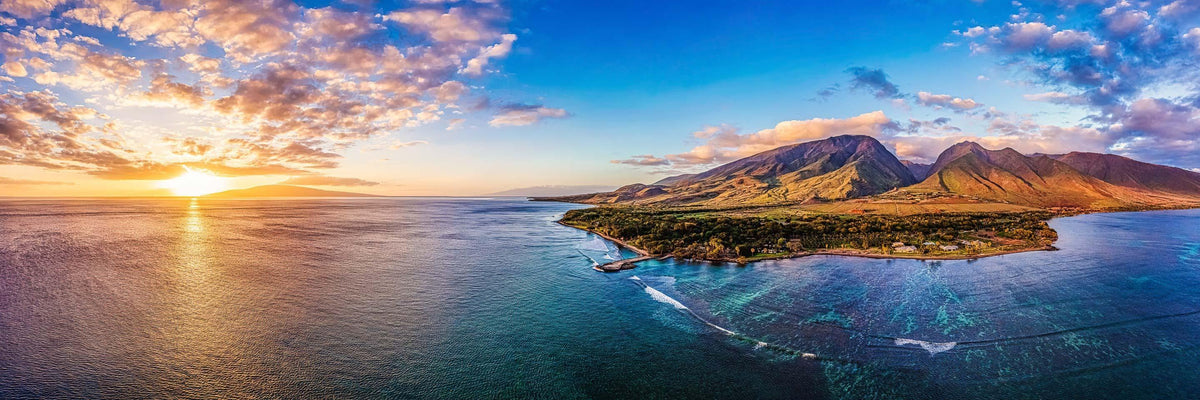
Olowalu Revealed began with a shift in vantage point. Lance knew Olowalu from the ground before seeing it from above. From that height, the reef, shoreline and folds of the valley no longer appeared as separate experiences. They became connected parts of one landscape. He wanted to preserve that moment of recognition: the feeling that several familiar fragments had suddenly come together.
The panorama is composed to work at two distances. From across a room, the coastline and valley can read as a single broad structure. Move closer and the work changes. Smaller shapes emerge in the reef; water shifts in tone; roads, trees and terrain become things to explore rather than background details. A photograph that first appears to be a view becomes a place to spend time.
Why resolution matters—and why it is not the point
Many of Lance's panoramas are assembled from multiple overlapping exposures. Combining them can create a field of view and level of detail that one frame would not contain. The technical process matters because it expands what the viewer can encounter. But a large file is not, by itself, an artistic accomplishment. Its value depends on what the image reveals and how the composition holds together.
Look from two distances
A panoramic photograph can behave almost like two works in one. From across a room, its composition has to hold. Closer in, smaller relationships become visible. The movement between those distances is part of what Lance is trying to give the viewer; the size is useful only when the image itself continues to reward attention.
The practical test is simple: does moving closer change the experience? With a richly detailed panorama, the distance between a first glance and a sustained look can be substantial. At one scale, you see a landscape; at another, patterns and small structures come forward. That movement is part of the work's intended rhythm.
The work and the room
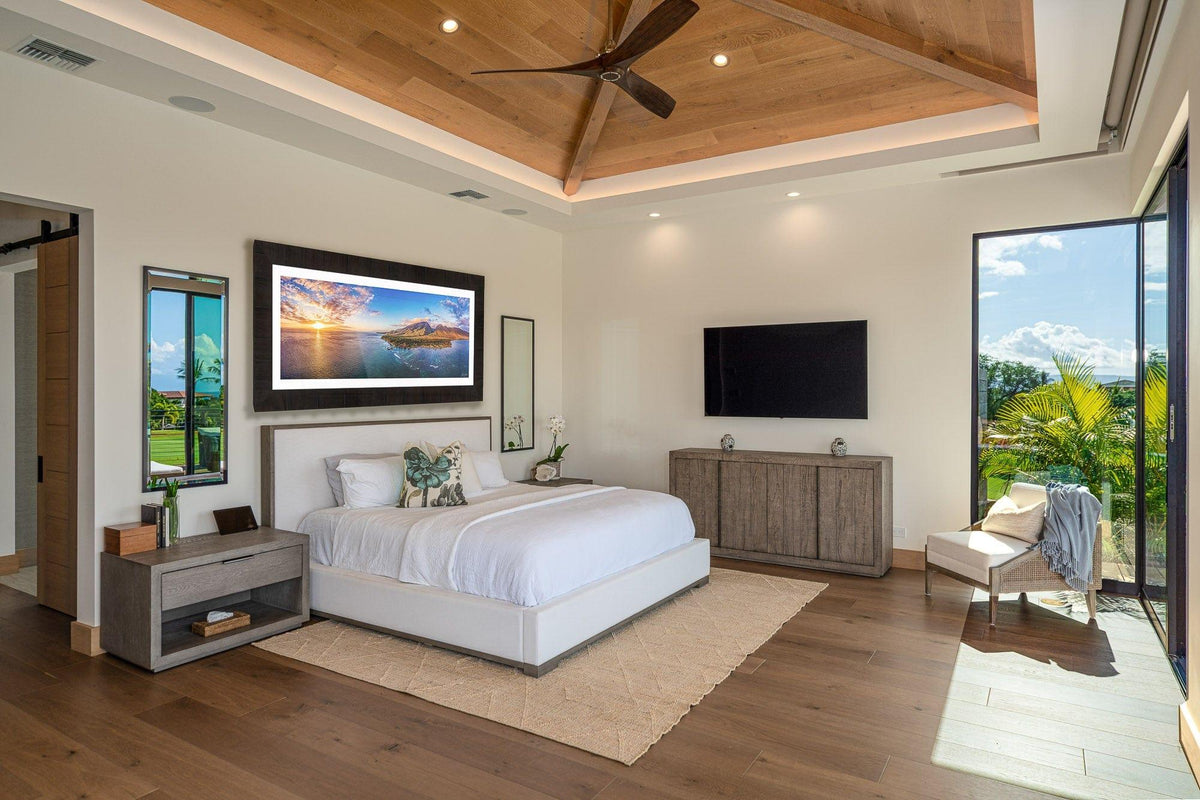
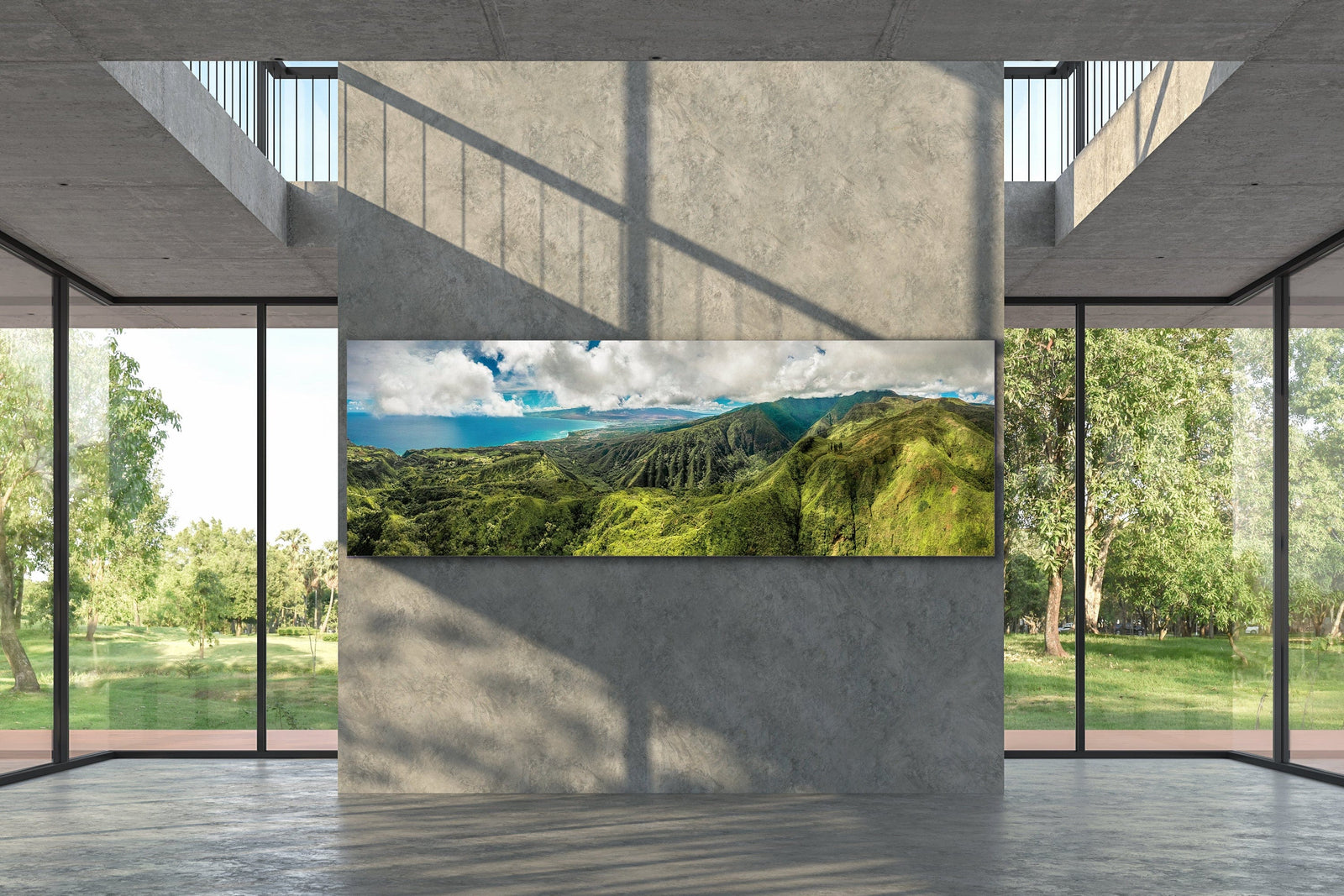
Photography changes when it becomes a physical object. Size affects how much of an image the eye can take in at once. A smaller print can encourage an intimate encounter; a large panoramic work can ask the viewer to move along its length or cross a room to see it whole. Neither is inherently better. The question is whether the presentation suits the photograph and the space in which it will live.
This is the thinking behind Lance's architectural-scale program. Nā Ala Hele, made in December 2021, is conceived as a unique 1/1 photographic work rather than a standard edition. Its source file is 395.2 megapixels, and the proposed realization is typically approximately ten to fifteen feet wide, developed in conversation with the collector and the intended wall. The size is a means to experience the image, not a substitute for its substance.
A different kind of seeing
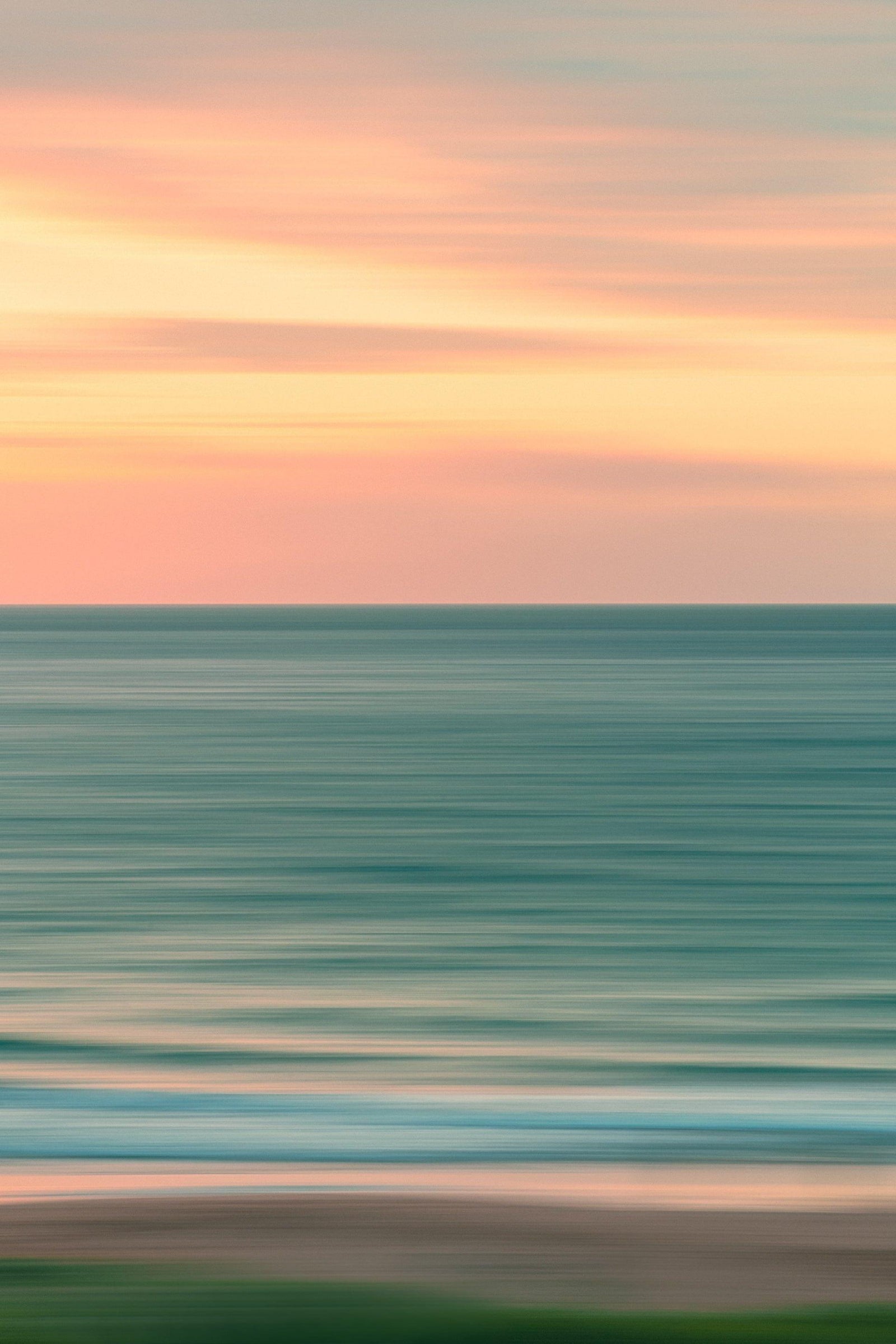
Not every work pursues greater detail. In photographs such as Evening Embrace, Lance moves the camera during exposure, allowing information to dissolve rather than accumulate. Where the panoramic works invite close examination of small structures, these images explore what remains when detail gives way to movement and impression.
The approaches might appear opposed: one builds an image from many exposures; the other deliberately allows definition to recede. Yet both begin with a similar question. What new way of seeing a place becomes possible through the act of making a photograph?
Made for attention
The title Made for a Longer Look is less a promise about size than a description of the encounter Lance hopes for. A work should reward the first glance and then offer something more. That might be the unexpected continuity between reef and valley, the complexity of a landscape revealed at scale, or the quiet sensation of movement in a deliberately softened image.
Explore Olowalu Revealed, Nā Ala Hele and other photographs through Lance's artist page at Maui Fine Art Collective. The work is best understood not by a list of camera specifications but by looking, moving closer and discovering what changes.
See the work, then the scale
Olowalu Revealed offers a way into the practice through one coastline. Nā Ala Hele takes the question into a different physical register: a unique work developed for a particular wall. Its artwork page explains that program and the practical process, including the difference between an initial visualization and a final scale decision.
