


MAUI · PHOTOGRAPHIC ARTIST
Lance Ehrecke
Work that holds the longer look.
Lance Ehrecke is a Maui-based photographic artist and founder of Maui Fine Art Collective.
His practice moves between aerial photography, constructed panoramas, large-scale presentation and intentional camera movement. The common thread is curiosity about perspective: what changes when the camera moves higher, when many exposures become one image, when a photograph expands to architectural scale, or when motion strips the landscape of literal detail.
Maui remains the environment in which much of that curiosity develops—not as a theme applied to the work, but as a place Lance continues to encounter from different positions, distances, weather and light.
I have never lost the feeling that there is another perspective.
I can go back to a place I know well and something changes—the light, the weather, my position, the technology available to me, or simply what I notice.
That is still the best part:
finding something that stops me and figuring out how to show you what I found.
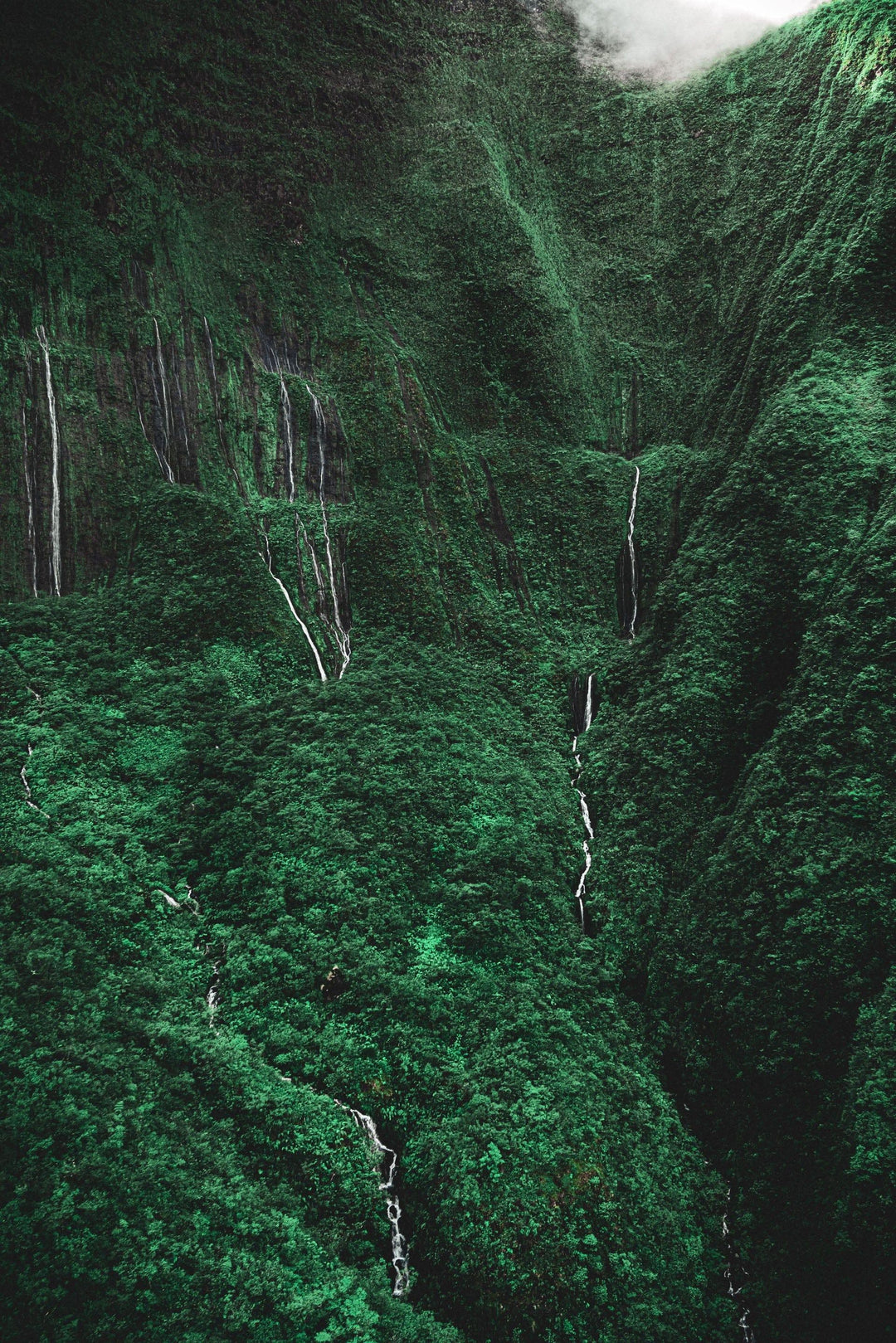
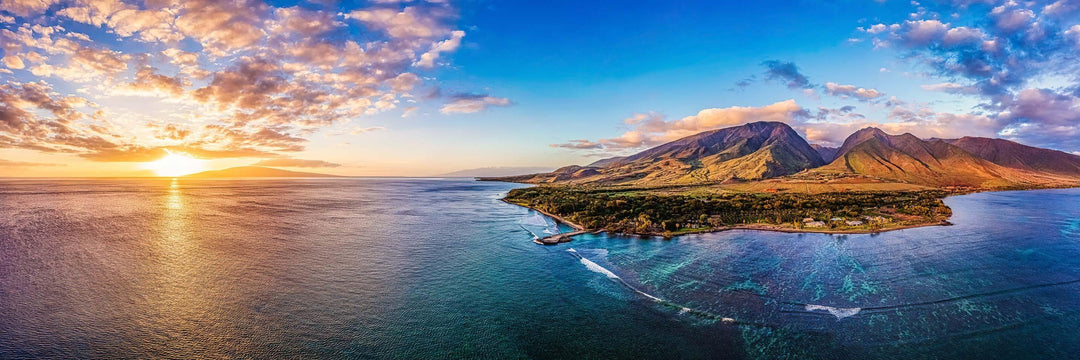
Extreme resolution, multi-frame construction, unusual access and experimentation with abstraction—used to make photographs the eye could not otherwise hold in quite the same way.
THE PRACTICE
What can a camera make possible that ordinary sight cannot?
Photography gets most interesting to me when it can show me something my eyes could not hold in quite the same way.
Sometimes that means changing the vantage point. Sometimes it means constructing one image from many frames until there is enough information for the finished work to become physically enormous. Sometimes it means doing almost the opposite—moving the camera and allowing detail to disappear.
The tools change.
The part I keep chasing is the same: take something familiar, find a perspective I have not experienced before, and build the photograph strongly enough that someone else can step into it.
I want the work to become more compelling as it becomes larger.

Some photographs need room to become themselves.
A panoramic photograph can look complete on a screen and still only hint at what is inside it.
The work I am pursuing is built to survive enlargement.
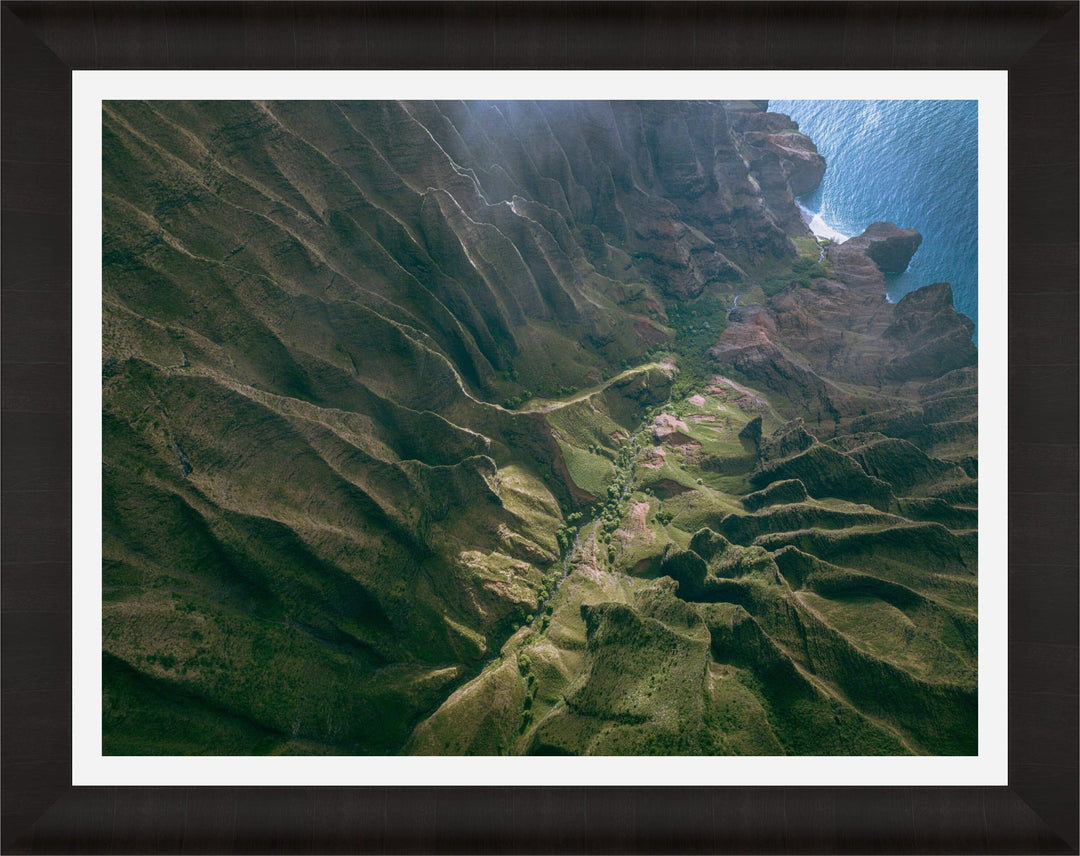
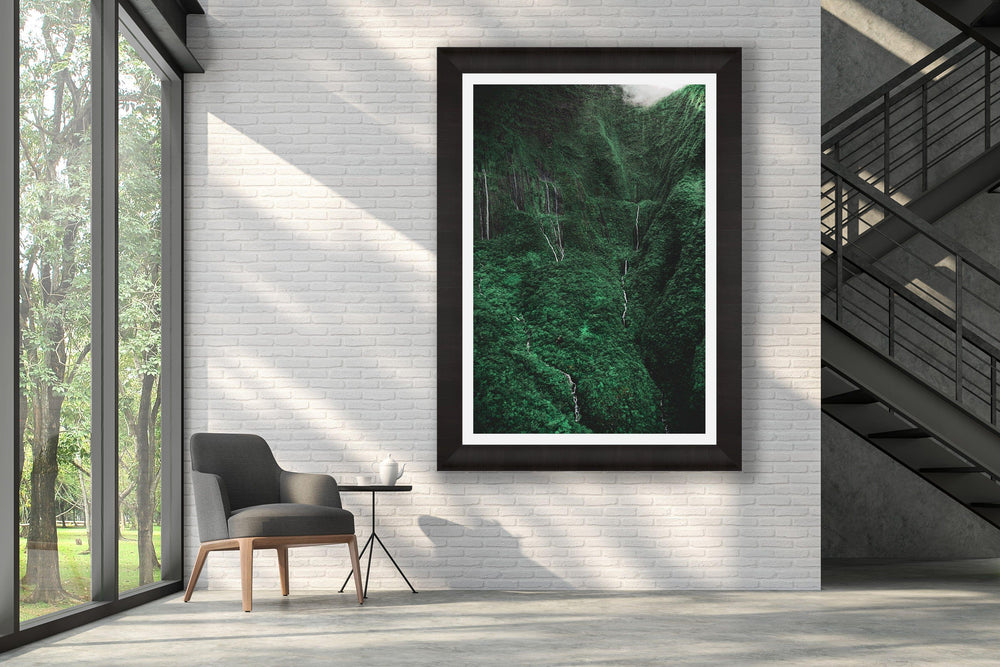
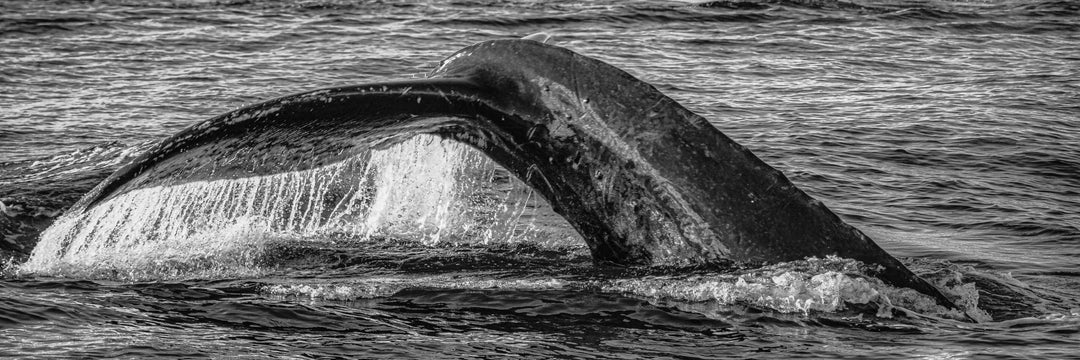
At architectural scale, the relationship changes. From across the room, the image reads as one landscape. Walk toward it and smaller structures begin to appear—ridges, trees, reef, water, weather, people, texture.
That movement matters to me.
I do not want scale simply because a large photograph is impressive. I want scale because the image contains enough information to reward getting closer.
The goal is not a bigger print.
It is a deeper encounter with the photograph.
How the work is built.
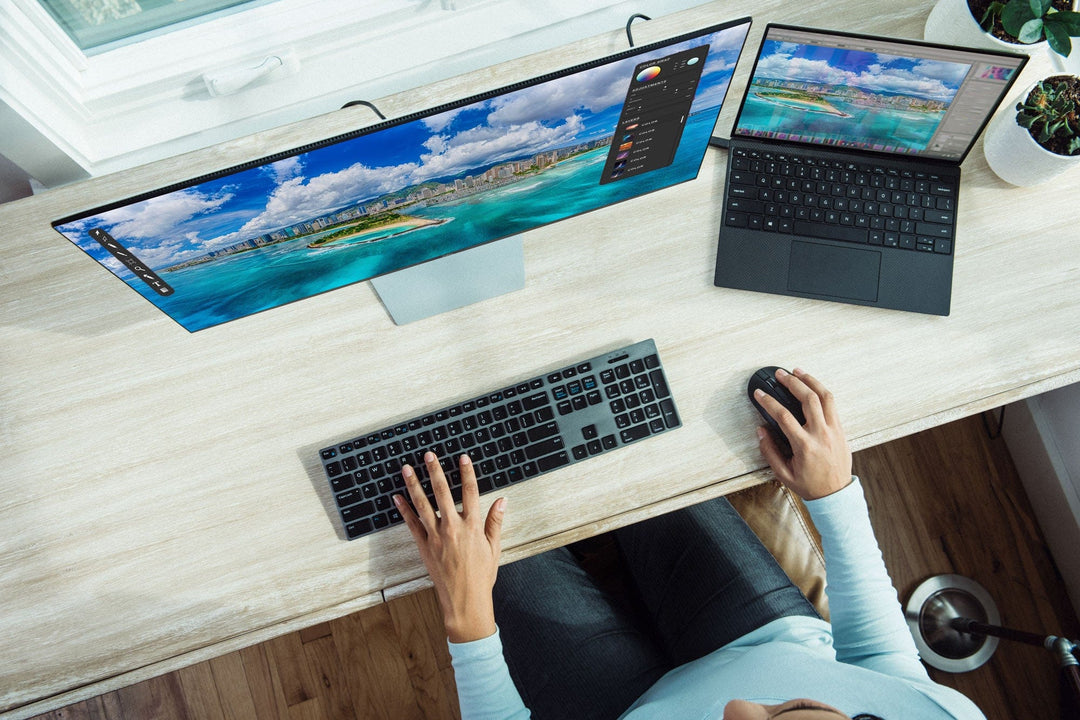
EXTREME RESOLUTION
Resolution is not a specification I chase for its own sake.
It is what lets a photograph keep revealing information when the physical work grows far beyond conventional photographic scale.
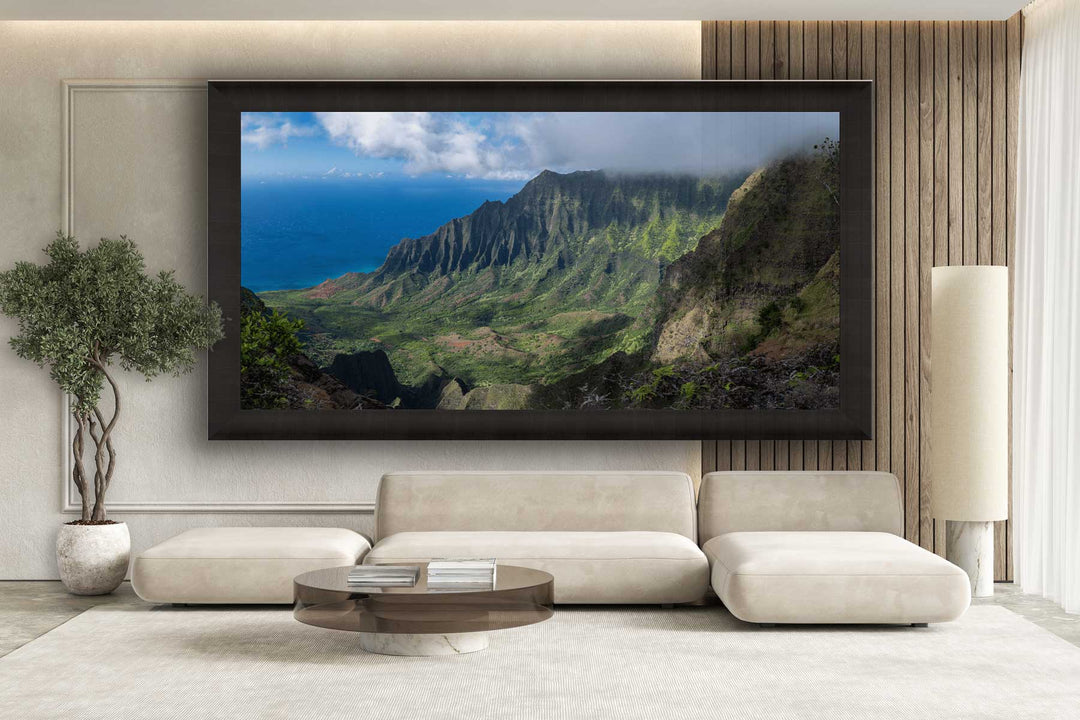
MULTI-FRAME CONSTRUCTION
Many of the panoramic works begin as multiple overlapping exposures.
I build those frames into a single field of view that no one exposure—and often no one glance—could contain.

UNUSUAL ACCESS
Sometimes the most important decision happens before the shutter opens:
Where can the camera be?
Height, distance and access can completely reorganize a familiar place. Changing the position of the camera can change the subject itself.

PHYSICAL SCALE
The final dimensions are part of the work.
When a photograph becomes large enough that you have to move toward it and away from it to understand it, viewing becomes a physical experience rather than a single glance.
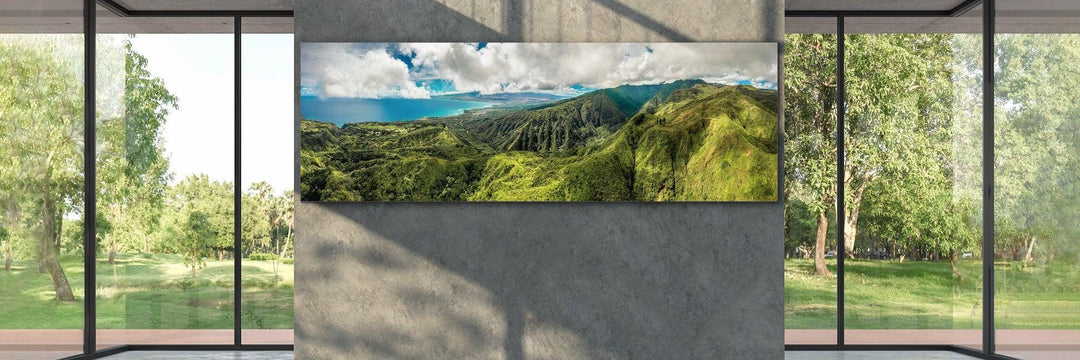
The work rewards attention.
Some of Lance's photographs are conceived specifically to become physically large.
Not because bigger is automatically better, but because scale changes the experience.
From across the room, the whole composition holds.
Move closer and smaller worlds begin separating inside it.
Stay with the work and details that seemed invisible moments before become places to stop.
From far away, see the whole.
Come closer, notice more.
Stay longer, find what you missed.
Works at Scale begins with Na Ala Hele and Waikiki Reef—two unique 1/1 photographic works developed for final dimensions of roughly 10–15 feet wide.
Each is realized once, in partnership with its collector.
Two ways of making the familiar unfamiliar.
At one end of my practice, I keep adding information.
More frames. More resolution. More of the scene held together inside one constructed image.
At the other end, I take information away.
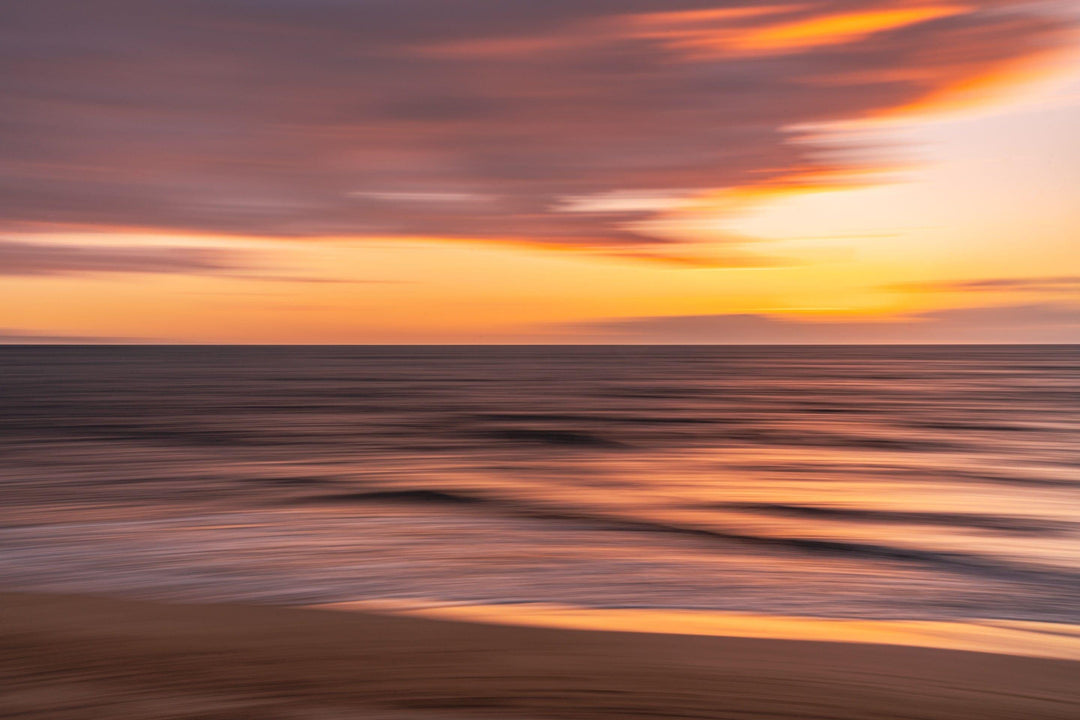
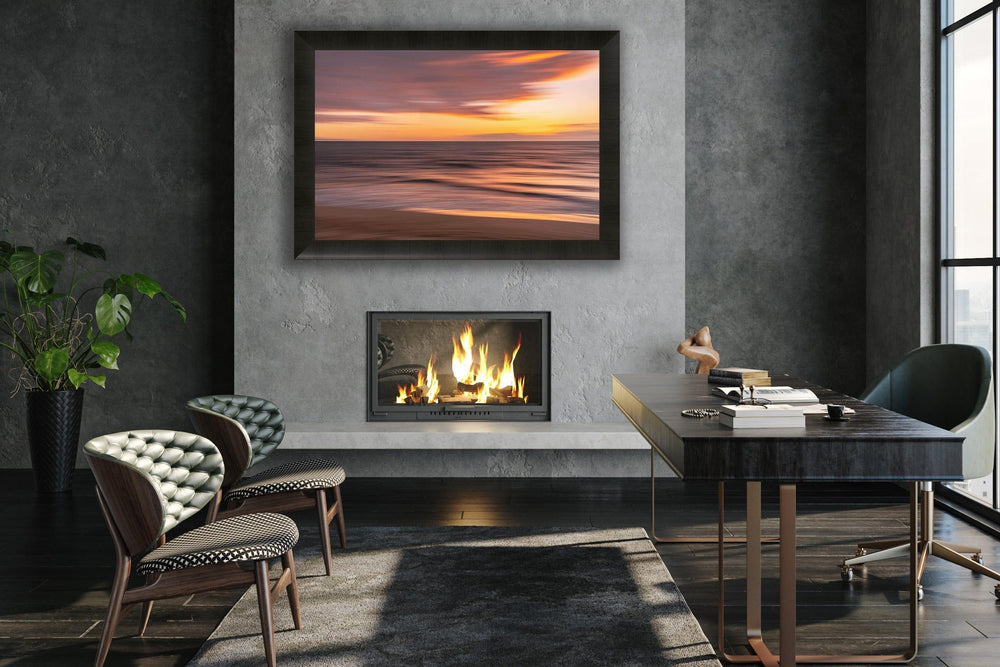
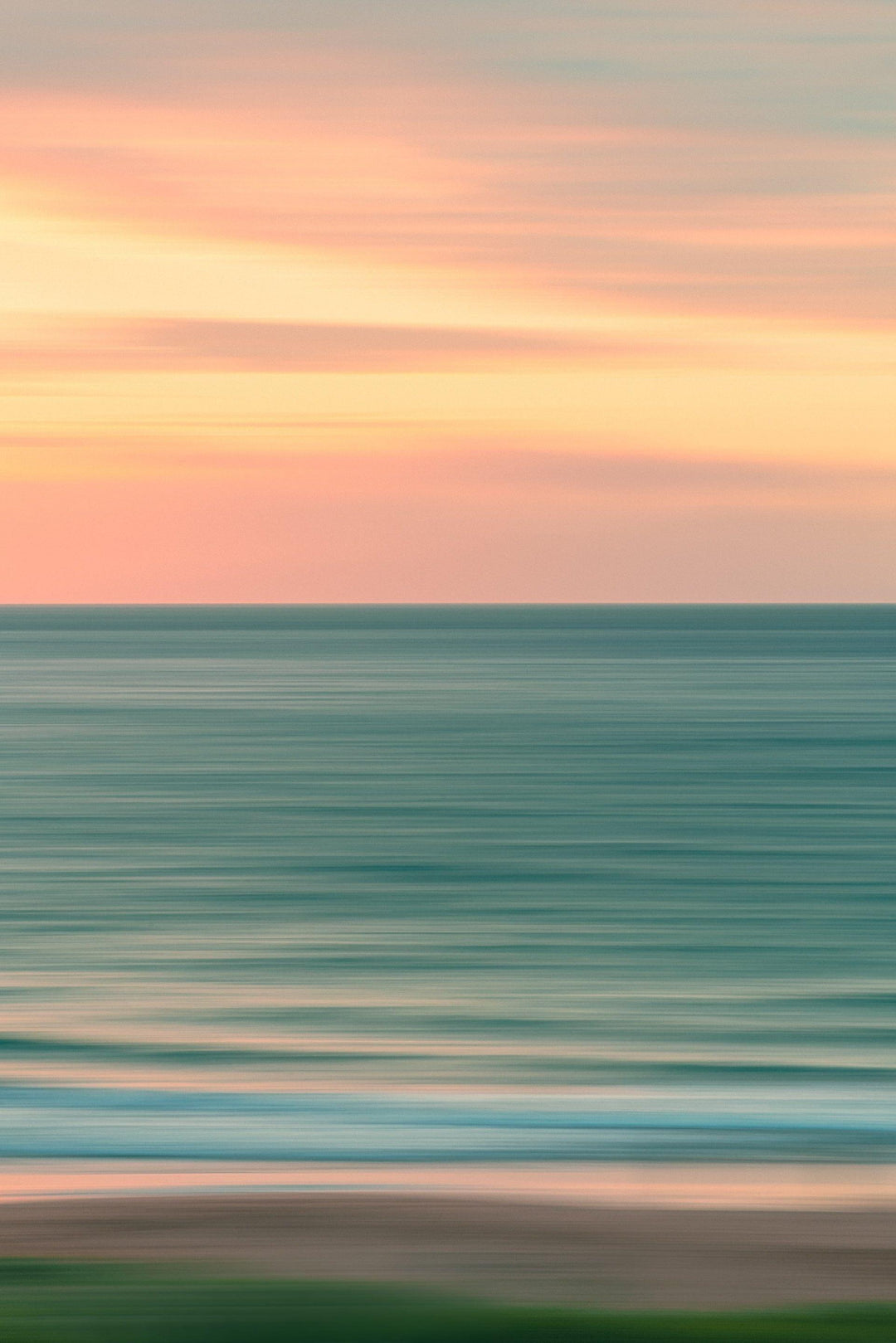
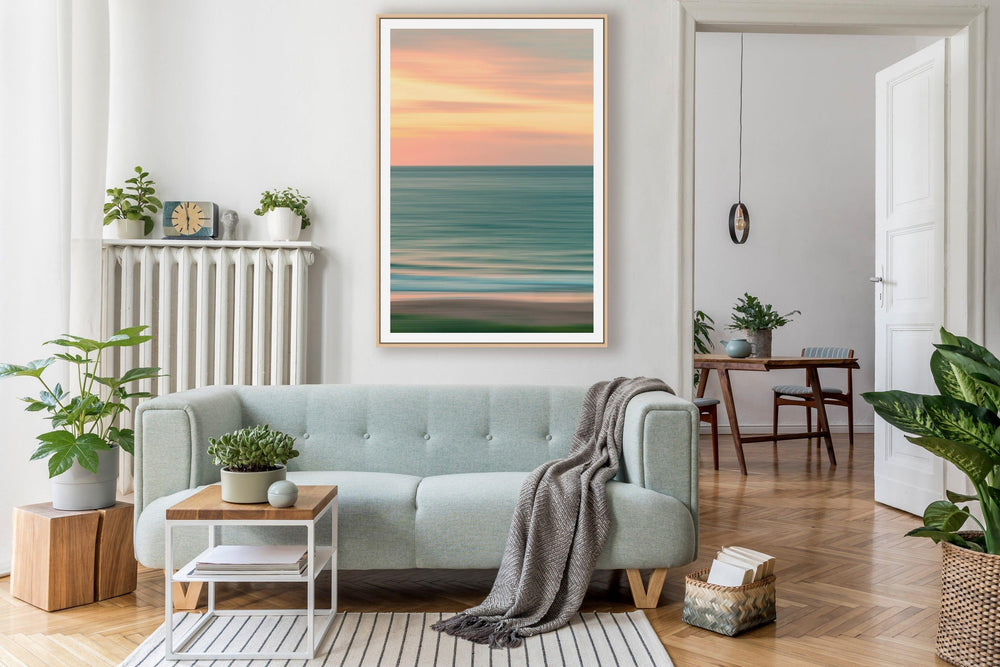
With intentional camera movement, detail begins to dissolve. Shoreline, water and light become gesture and color.
They look like opposite approaches, but I am after the same thing in both:
a way of seeing a place that was not available to me before I made the photograph.

MOTION
When detail disappears.
Sometimes sharpness gets in the way.
For works like Evening Embrace, I move the camera during the exposure and let the literal landscape begin to fall apart.
What remains is not a record of every object that was there.
It is color, movement and the memory of having looked.

THE SITTING STONE
Where this is going.
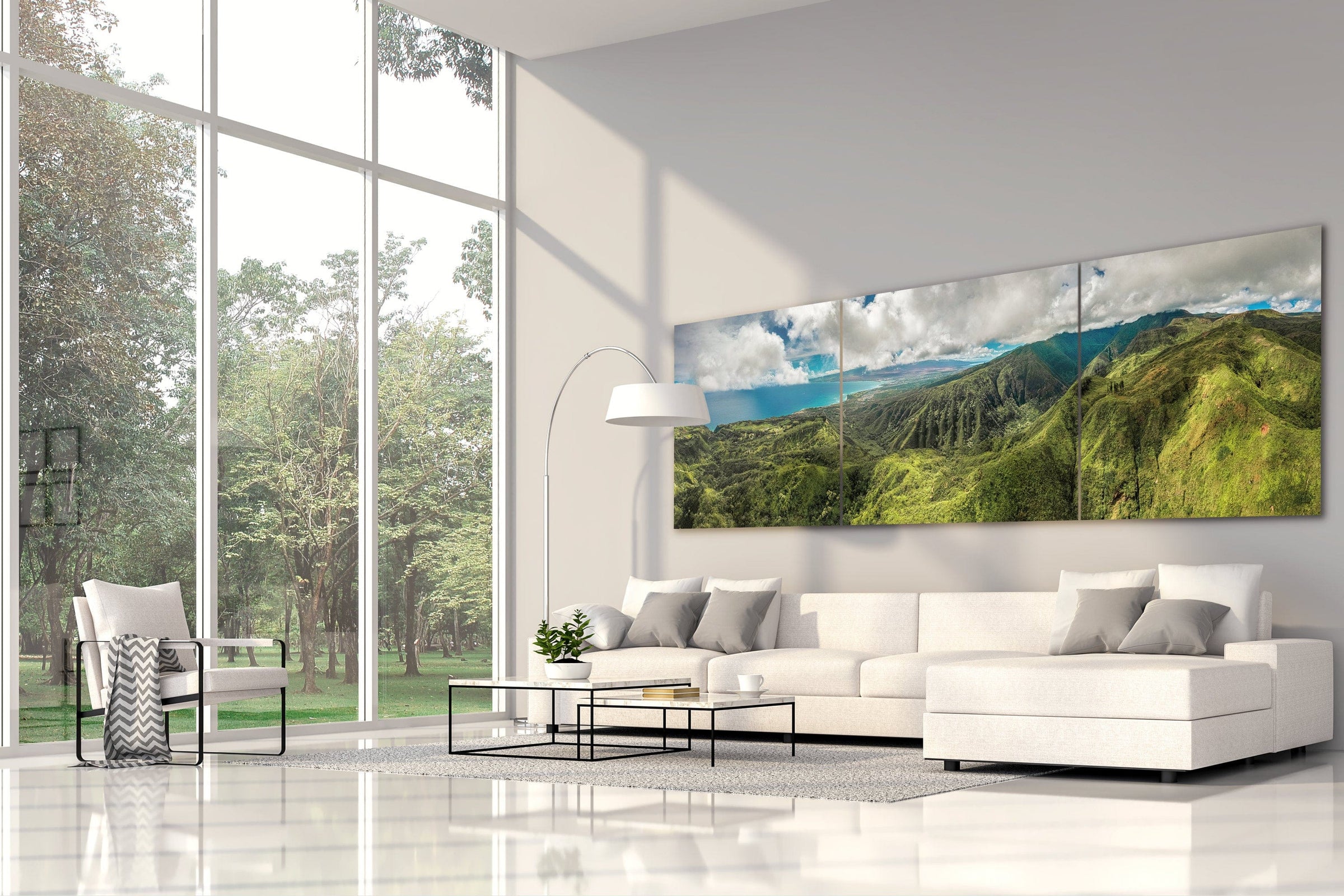
During a period when I needed to slow down, I spent time camping on Maui's Hāna side and found a place where I could sit for long stretches with waterfalls, ocean, weather and distance all moving through the same field of view.
A normal photograph could show the place, but it could not hold the experience of looking around inside it.
The Sitting Stone grew from that problem.
The goal is not a bigger file.
It is a bigger experience.
MAUI · PHOTOGRAPHIC ARTIST
Impossible perspectives at immersive scale.
Extreme resolution, multi-frame construction, unusual access and experimentation with abstraction—used to make photographs the eye could not otherwise hold in quite the same way.
Selected Works
Works that trace the practice from constructed perspective and architectural scale to movement and abstraction.



See the scale in person.
Large photographic work changes when it leaves the screen.
Selected Lance Ehrecke works can be experienced at current display locations on Maui, including work shown through Sabado Gallery in Wailea when available.
Displays rotate.
If there is a specific work you would like to see, contact MFAC before visiting and we will tell you what is currently on view.
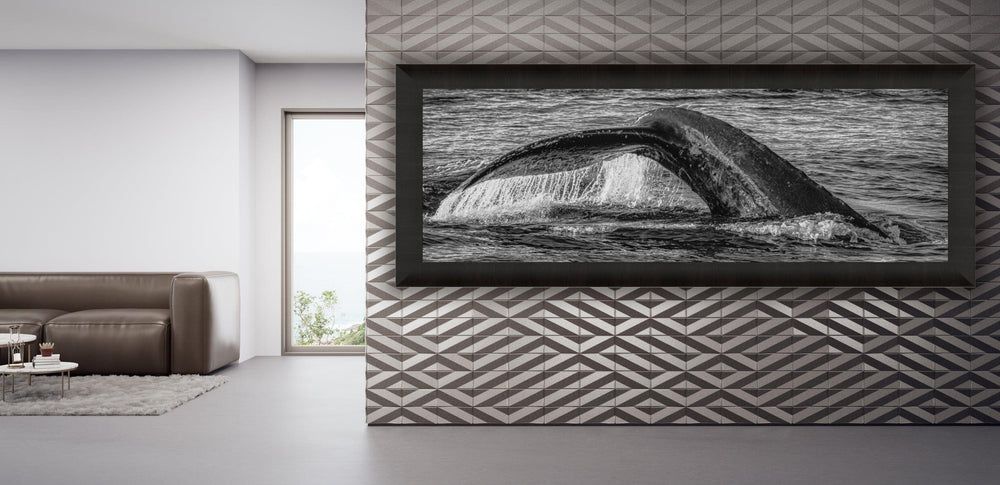
When the wall becomes part of the work.
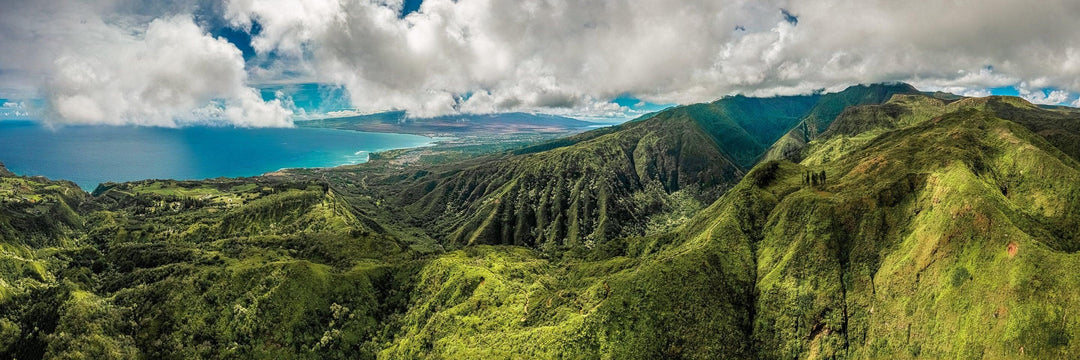
Some of Lance's photographic works are specifically suited to large architectural environments.
MFAC can help evaluate the relationship between the image and the space before production begins—including dimensions, wall proportion, presentation, visualization, delivery and installation requirements.
For designers, architects and private collectors, the process can begin with a wall photograph, dimensions or project drawings.


LANCE EHRECKE · MAUI
Start with the work that stopped you.
If there is a piece you keep returning to—or a wall, scale or perspective you want to explore—tell us.
MFAC can help with availability, presentation, visualization, large-scale production and viewing on Maui.